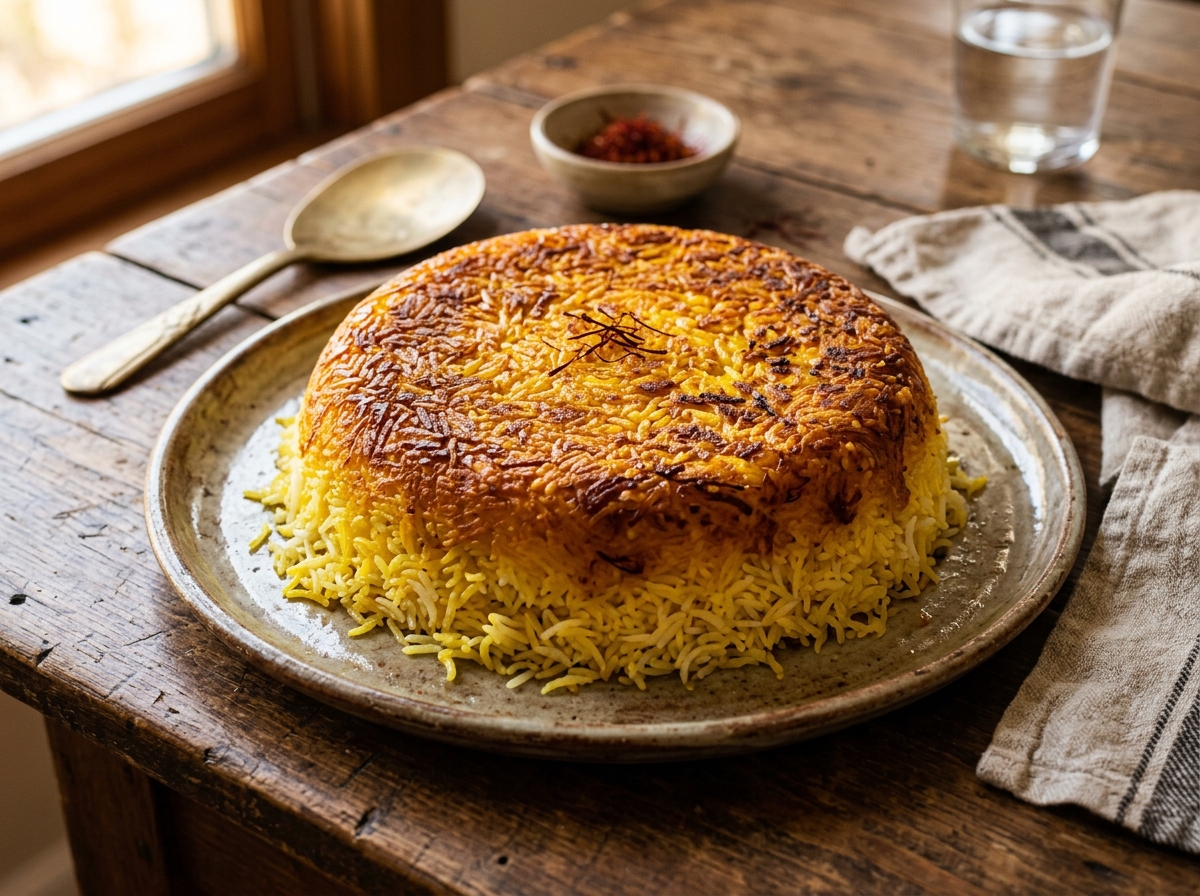
Persian Tahdig Rice (Crispy-Bottomed Saffron Rice)
Cultural Context: Tahdig means "bottom of the pot" in Farsi, and in Persian cooking, it's the most coveted part of the meal. That golden, shatteringly crispy crust of rice — achieved by slow-cooking buttered rice in a heavy pot — is what everyone fights over. Making perfect tahdig is a point of prid

Time: 1 hour 15 minutes · Yield: 6 servings
Ingredients
- ●2 cups (400 g) basmati rice
- ●8 cups (2 L) water
- ●2 tablespoons salt (for the parboiling water — most gets drained)
- ●Generous pinch of saffron threads (about ¼ teaspoon), crumbled
- ●3 tablespoons hot water (for blooming saffron)
- ●4 tablespoons (60 g) unsalted butter
- ●3 tablespoons vegetable oil or ghee
- ●¼ cup (60 ml) water (for steaming)
- ●1 tablespoon plain yogurt (optional — for extra crispy tahdig)
Method
- **Soak the rice.** Place the basmati rice in a large bowl, cover with cold water, and swirl gently. Drain and repeat 3-4 times until the water runs mostly clear. Cover with fresh cold water and soak for at least 30 minutes (up to 2 hours). This removes excess starch and ensures the grains cook up separate and fluffy.
- **Bloom the saffron.** Place the crumbled saffron threads in a small bowl with 3 tablespoons of hot water. Let steep for at least 15 minutes. The water will turn a deep, brilliant gold.
- **Parboil the rice.** Bring 8 cups of water to a rolling boil in a large pot. Add 2 tablespoons salt. Drain the soaked rice and add it to the boiling water. Boil for 5-6 minutes, stirring gently once or twice. The rice should be par-cooked — tender on the outside with a tiny chalky core when you bite a grain. It will finish cooking in the steam. Drain in a fine-mesh sieve and rinse gently with lukewarm water.
- **Prepare the tahdig layer.** In a small bowl, mix together 2 large spoonfuls of the parboiled rice with half of the saffron water and the yogurt (if using). This saffron-stained rice will become your golden crust.
- **Build the pot.** In a heavy-bottomed non-stick pot or Dutch oven, melt the butter with the oil over medium heat. Swirl to coat the bottom and about an inch up the sides. Spread the saffron-yogurt rice mixture in an even layer across the bottom of the pot, pressing it down gently. This is your tahdig foundation.
- **Add the remaining rice.** Spoon the rest of the parboiled rice on top in a mound (don't pack it down — you want steam to circulate). Drizzle the remaining saffron water over the mound. Using the handle of a wooden spoon, poke 5-6 holes down through the rice to the bottom — these are steam vents.
- **Steam.** Pour ¼ cup water down the side of the pot. Wrap the pot lid tightly in a clean kitchen towel (this absorbs condensation and prevents drips). Cover the pot. Cook over medium heat for 8-10 minutes until you hear a gentle sizzle, then reduce heat to the lowest setting. Cook for 40-45 minutes. Don't lift the lid.
- **The reveal.** After 45 minutes, you should smell toasted rice — buttery and nutty. Remove the pot from heat. Set the bottom of the pot in a shallow dish of cold water for 30 seconds (the thermal shock helps release the crust). Place a large platter over the pot and, with conviction, flip it over. Lift the pot away. If the tahdig gods are with you, a golden, intact crust sits atop a mound of fluffy, saffron-streaked rice.
- **If the tahdig cracks or sticks:** Don't panic. Use a spatula to free the crust pieces and arrange them on top. It still tastes incredible.
- *Storage:** Tahdig rice is best served immediately — the crust loses its crispness over time. Leftover rice (without the crispy bottom) keeps 3 days refrigerated. Reheat in a covered pan with a splash of water. You can repurpose leftover rice into fried rice or stuffed peppers. Do not freeze — the texture of basmati degrades.
Get the Full Book
Whole Kitchen Collection
All 4 seasonal cookbooks — Spring, Summer, Fall & Winter
$47 Buy Now
Complete Collection — All 11 Books
250+ recipes for $97 (save $46 vs. buying individually)
$97 Get All 11